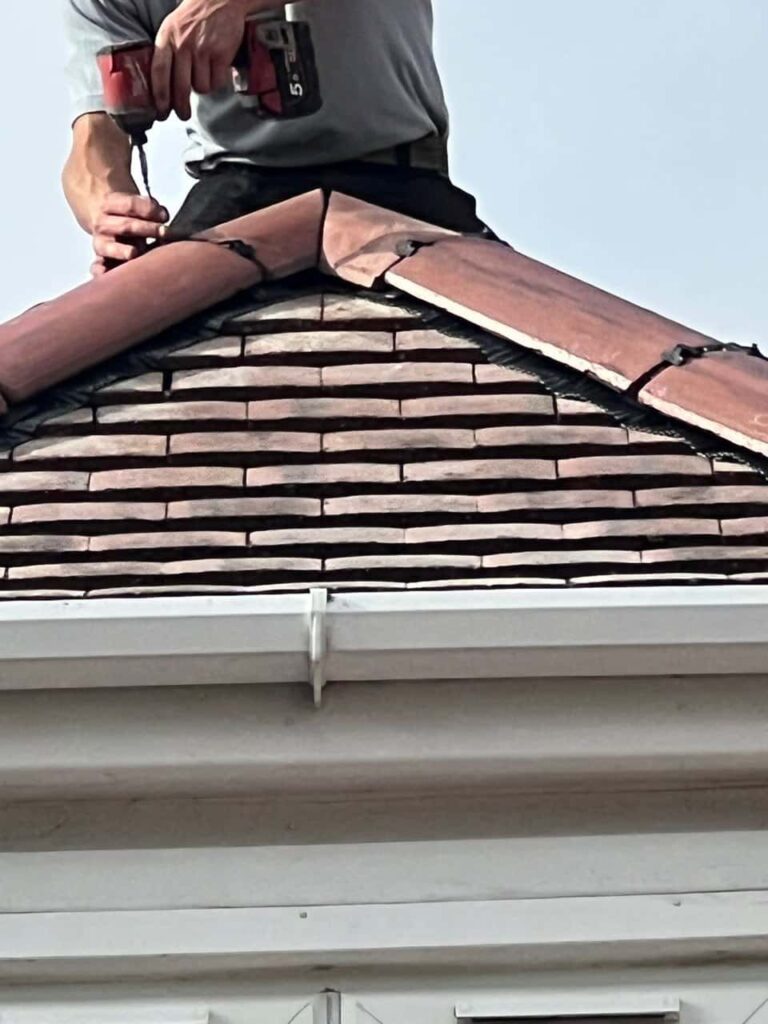
Every roof changes as it gets older. Tiles and slates become weathered, mortar can gradually deteriorate, and roofing materials may lose some of the appearance they had when first installed. These changes do not automatically mean that the roof is failing or requires extensive work.
The more important question is whether the roof is simply showing expected signs of age or whether active deterioration is affecting its ability to protect the property.
For homeowners in Saxilby, Derbyshire, a professional roof inspection can help make this distinction. Rather than judging the roof purely by its appearance, an experienced roofer can examine how individual components are performing, identify evidence of recent or continuing damage, and determine whether particular areas require attention.
How Does a Roof Inspection Separate Normal Ageing From Active Deterioration?
The difference usually becomes clearer when several factors are considered together.
Normal ageing tends to develop gradually and relatively consistently. Active damage is more likely to involve changes in position, loss of material integrity, water ingress or defects that are continuing to develop.
A professional inspection therefore considers the pattern, location and severity of deterioration rather than treating every weathered component as a problem.
Weathered Appearance Does Not Always Mean Roof Failure
Older roofing materials rarely look completely uniform.
Tiles can become discoloured or weathered through prolonged exposure to the elements, while the overall roof may still remain functional. Visual ageing alone is therefore not enough to determine that repairs are required.
The important consideration is whether the materials continue to perform their intended function.
A professional assessment looks beyond appearance to establish whether tiles, slates and other roofing components remain secure and capable of providing reliable weather protection.
Active Damage Often Involves Physical Change
Damage becomes more concerning when roofing components are no longer remaining in their intended position or condition.
Cracked tiles, slipped slates, displaced ridge materials or sections that have become loose can provide clearer evidence of active deterioration.
These defects create potential weaknesses in the roof covering and can allow weather to affect areas that would normally remain protected.
The distribution of these problems is also important. One isolated damaged tile may represent a local defect, while similar problems across several areas can indicate broader deterioration.
Water Ingress Provides Important Evidence
One of the strongest indicators that a roofing defect is affecting performance is water entering the property.
Internal damp patches, staining or moisture appearing during rainfall can indicate that part of the roof’s weatherproofing system has become compromised.
However, identifying the exact cause requires care because water can travel beneath roofing materials before becoming visible internally.
A professional inspection considers the location of internal symptoms alongside the external roof condition to identify likely routes of water entry.
Recent Movement Can Look Different From Long-Term Weathering
An experienced roofer can often distinguish between materials that have gradually weathered in position and components that have recently moved or become disturbed.
For example, a tile that has remained secure while developing an aged surface appearance presents a different concern from one that has slipped out of alignment.
Changes in alignment, exposed areas or inconsistencies within an otherwise uniform roof can provide useful clues that something has happened more recently.
These observations help establish which areas deserve closer investigation.
Cracks Need to Be Considered in Context
Not every visible crack has the same significance.
The location, depth and extent of cracking all matter. A minor surface imperfection may have little effect on performance, while a crack that compromises a roofing material can create a direct route for water.
An inspection also considers whether similar cracks appear elsewhere.
Widespread deterioration can indicate a different problem from one isolated damaged component, so assessing the surrounding roof is essential before deciding what work is appropriate.
Roof Details Can Deteriorate Differently From the Main Covering
A roof may have tiles or slates that remain in reasonable condition while other components require attention.
Flashing, valleys, ridges, verges and junctions all contribute to keeping water outside the property. These areas can experience different forms of wear because they perform different functions and may be exposed to particular stresses.
Professional roof assessment therefore looks beyond the main covering.
A roof should be considered as a complete weatherproofing system rather than simply a collection of tiles.
Previous Repairs Provide Useful Information
Earlier repairs can help build a picture of how a roof has changed over time.
A repaired section that remains secure and weather-resistant may be performing exactly as intended. If new deterioration appears elsewhere, it should not automatically be assumed that the previous work has failed.
Conversely, movement or deterioration around an earlier repair may justify closer examination.
Reviewing previous repair areas alongside the surrounding original materials helps determine whether current problems are connected or separate.
The Pattern of Deterioration Is Important
Professional roof inspection is particularly valuable because it looks for patterns rather than isolated imperfections.
Normal ageing often affects similar materials gradually. Active damage may appear more abruptly, affect particular exposed sections or create noticeable inconsistencies across the roof.
For example, a generally weathered roof with one recently displaced section tells a different story from a roof showing widespread movement and repeated defects.
Recognising these patterns helps determine whether the roof requires targeted attention or broader investigation.
Internal Signs Can Help Confirm External Findings
Roof assessment is not always limited to what can be seen outside.
Where accessible and appropriate, signs within the property can provide additional information about how the roof is performing. Dampness, staining or evidence of moisture can help establish whether an external defect is actively allowing water through.
This information can be particularly useful where several potential weaknesses are visible externally.
Matching internal symptoms with likely external entry points allows the assessment to focus on defects that are affecting actual performance.
A Roof Can Look Old and Still Perform Reliably
One of the main benefits of professional assessment is avoiding unnecessary concern about appearance alone.
An older roof may have weathered materials and signs of previous maintenance while still providing dependable protection. Ageing does not automatically mean that replacement or extensive repairs are required.
If the covering remains secure, roof details are performing correctly and there is no evidence of active water ingress or developing defects, continued observation and appropriate maintenance may be sufficient.
The condition of the roof matters more than whether it looks new.
A Roof Can Also Look Reasonable While Hiding a Problem
The opposite situation is also possible.
From ground level, a roof may appear generally intact while a small defect around a junction, flashing detail or less visible section is allowing water to enter.
This is why visual appearance from a distance is not always a reliable guide to performance.
Professional inspection provides a closer assessment of vulnerable areas that may not be obvious to the homeowner.
Why Comparing Different Roof Areas Helps
Looking at different sections of the same roof can provide useful evidence.
If most roofing materials remain aligned and secure but one area shows movement or accelerated deterioration, that difference may indicate a localised active problem.
If similar weathering is distributed consistently across the entire covering without evidence of failure, it may be more representative of general ageing.
Comparison helps place individual observations in context rather than treating every imperfection as equally significant.
When Should Roof Ageing Be Investigated More Closely?
Certain changes make professional assessment particularly worthwhile, including:
- New or recurring water ingress
- Recently displaced tiles or slates
- Cracks that appear to be developing
- Loose or deteriorating roof details
- Problems appearing in several areas
- Increasingly frequent repair requirements
- Noticeable changes following poor weather
- New defects around previously stable sections
These signs do not automatically indicate extensive deterioration, but they provide good reasons to establish what has changed.
Why Accurate Diagnosis Leads to Better Roof Repairs
A successful roof repair begins with knowing what actually requires attention.
Treating every sign of age as damage can lead to unnecessary intervention. Equally, dismissing active deterioration as normal weathering can allow a repairable problem to develop further.
A professional assessment helps find the appropriate middle ground.
By identifying which components are simply ageing and which are actively deteriorating, roofing work can be focused where it is genuinely required.
Professional Roof Inspections in Saxilby
Understanding the condition of an ageing roof requires more than looking for obvious broken materials.
At Saxilby Roofing Repairs, we assess roofs in Saxilby, Derbyshire, by considering the condition of the covering, roof details, previous repair areas and any signs that performance has changed. The objective is to distinguish expected weathering from defects that are actively affecting the roof.
This considered approach helps ensure that recommendations are based on the actual condition of the roof rather than its age or appearance alone.
Conclusion
A professional roof inspection distinguishes active damage from normal ageing by examining how roofing materials are performing rather than simply how old or weathered they appear.
Normal ageing may involve gradual changes in appearance while the roof remains secure and weather-resistant. Active deterioration is more likely to involve movement, cracking, recurring water ingress, failing roof details or a noticeable change in performance.
If your roof in Saxilby, Derbyshire, is showing signs of age and you are unsure whether any areas require attention, Saxilby Roofing Repairs can carry out a professional assessment. Contact our team to arrange an inspection and gain a clearer understanding of your roof’s current condition.
Call us on: 01522 459 288
Click here to find out more about Saxilby Roofing Repairs
Click here to complete our contact form and see how we can help with your roofing needs.